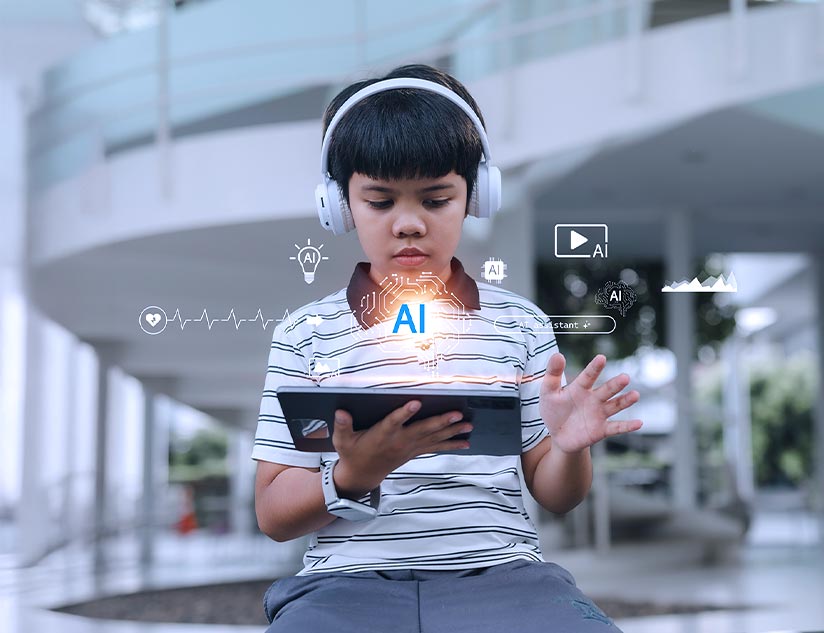


For ages, curriculum development used to be a multi-year cycle. A new requirement was raised, decision-makers would assess, educators would deliberate, K-12 publishing would incorporate the changes, and then textbooks would be rolled out. With the digitization of learning, the timelines have shrunk from years to weeks. Educator and regulatory demands have become more complex, and evolving technologies have amplified the competition. This has created a “content crisis” in the online educational ecosystem. The existing digital learning infrastructure can no longer support the emerging quality, speed, and effectiveness requirements. AI in course development is a response to the inadequacies of the legacy infrastructure, which hit a wall. AI in content workflows isn’t a revolution but an evolution to adapt to the changing educational landscape.
What Necessitated the Change: The Infrastructural Deficit
Adopting AI in K-12 course development has reached a point where it no longer is optional or even a nice to have. The cracks in the existing course development and distribution infrastructure seem to have opened wide:
No Way to Deliver the Required Throughput
Legacy infrastructure was built for multi-year course creation or modification projects. Modern education demands express delivery. AI-powered course development pipelines can work with short schedules at scale. They can automatically roll out the updates across time zones through optimized plans.
Content Teams Cannot Handle the Maintenance Burden
Lean course creation teams spend a larger chunk of their time managing technical debt. Every change requires days of manual testing and release effort. This is like pothole repair in the digital space. They are forced to fix broken links, update tags, and reformat, instead of working on actual pedagogical innovation.
Compliance Requirements Take a Toll on Audit Teams
From privacy to accessibility, and inclusiveness to evidence, the adoption process has too many checkpoints. From state to district-specific, K-12 publishing must take care of all levels of course requirements. This turns into operational overload, where content and distribution are only adjusted to meet the requirements, instead of actual work on instruction mechanisms and content quality.
Curriculum Update Process is Never-ending
In the always-on digital learning landscape, curriculum development is no longer a fix-and-done job. Curricula, addressable audience, and geographies are always expanding. Keeping up with the scalability of online learning platforms strains manual workflows.
Mitigating the Content Crisis: How AI Actually Solves the Problem
While most people just narrow it down to “write a lesson plan for Grade 5 fractions,” AI does a lot more than that. The biggest task of AI in course development is to save human energy and optimize resource utilization.
Absorbs the Grunt Work
AI-powered course development takes over all non-creative but high-stakes tasks. For instance, mapping 50,000 learning objects to the latest state standards, generating metadata, or reformatting content for diverse LMS platforms. AI course development tools handle all the heavy lifting, freeing up human work hours to focus on pedagogical integrity, align learning outcomes to global standards, and find solutions to bridge learning gaps.
Accelerates the Iteration Loop
Traditionally, course developers struggle to get feedback for even the smallest changes in the curriculum. It could take days, even weeks, to get inputs from different stakeholders. AI in course development allows curriculum development teams to create prototypes at scale. AI engines can apply a new instructional rule or stylistic change across all learning materials at once and get it ready for concerned reviewers.
Elevates Editorial Control
AI in course development works best with a human-in-the-loop approach. UNESCO emphasizes that AI should be used to enhance the role of curriculum developers and educators. AI can provide the first draft or a framework, but the final call remains with human editors. AI can translate and transform course materials for diverse audiences, but only a human can validate its cultural responsiveness and accuracy.
AI: The Backbone of Human-Led Content Development
K-12 publishing must embrace AI as an operational infrastructure rather than a human replacement. The technology can handle all the mundane tasks while doing the groundwork to encourage creative thinking. It can save course development time while ensuring quality, consistency, and reliability.
MagicBox’s AI-powered course and assessment authoring platform is the perfect example of how AI transforms course development by encouraging creativity and not replacing it. The platform manages scale, tagging, and distribution while allowing humans to handle empathy and pedagogical nuances. In K-12 education, AI content workflows empower humans to turn their creative ideas into reality. Embedding AI in your content workflows helps you get through the apparent “content crisis” by upgrading your operational infrastructure.
Try AI for free to experience how the technology can be the launchpad of creative course development at your K-12 educational publishing house.