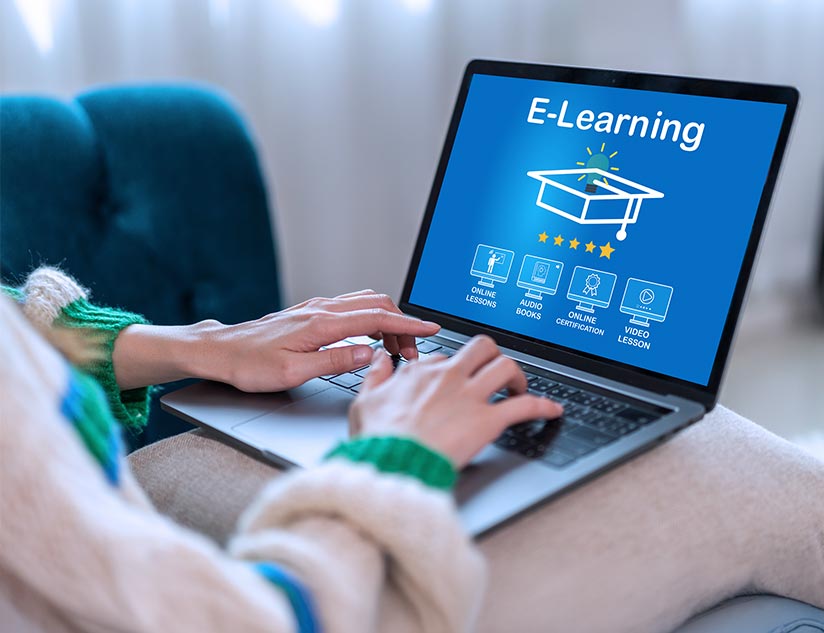


“Like schools, these platforms should be understood, in most contexts, as core educational infrastructures,” said UNESCO about digital learning platforms in its meeting brief for the 2026 International Day for Digital Learning. UNESCO’s emphasis on “digital spaces and resources to support public education online” underscores that digital isn’t about format in 2026; it’s about infrastructure. It’s time K-12 education providers make a choice: whether to simply continue digitizing legacy books, or demonstrate their commitment to digital-first publishing through scalable, data-driven ecosystems that districts now demand.
District Expectations are Setting New Goals
Static PDFs, along with SIS, LMS, and assessment platforms that work in isolation, and non-personalized learning delivery no longer meet decision-makers’ platform-level expectations. The US Department of Education considers education infrastructure critical and emphasizes the need for connectivity, security, interoperability, and accessibility.
District RFPs now cite certain core requirements as non-negotiables, such as:
- LMS-ready integration (LTI, rostering)
- Built-in assessments & analytics
- Accessibility compliance
- AI-powered learning support
- Secure eBook licensing & DRM
Print-to-Digital: Fast with Hidden Costs
Although traditional print-to-digital conversion enables quick launch with lower investment while maintaining familiar workflows, districts are shifting away from this form of K-12 digital publishing. This is because despite its benefits, this format has several shortcomings that lead to long-term investment depreciation:
Limited Interactivity
A simple PDF without interaction opportunities turns students into passive consumers of information rather than active participants in their learning journeys.
Weak Data Loop
Static eBooks cannot track how long a student spends on a page or where they struggle. This means teachers cannot initiate real-time intervention, while publishers lose the evidence needed to prove their content actually works.
Harder Renewals
When a product is just a digital copy of a physical book, it is easily viewed as a commodity that can be swapped for a cheaper version or a free OER (Open Educational Resource). Without unique digital stickiness, such as saved student progress and personalized learning paths, K-12 digital publishers risk losing district renewal opportunities.
Poor AI-Readiness
Static conversions lack the structured data, such as tags, metadata, and modular content blocks, that are crucial to AI-powered elevation of digital learning experiences.
Bottom Line: It Digitizes Pages, Not Learning Experiences
Traditional print-to-digital conversion carries forward the constraints of a physical book into the online learning ecosystem and fails to leverage the adaptive potential of digitization. These prioritize format over the pedagogy, and cannot support immersive, scalable digital ecosystems that UNESCO and modern school districts now demand.
Digital-First: Built for Scale
Digital-first publishing instills several capabilities within the learning ecosystem:
Modular, Standards-Aligned Content
Advanced course and assessment authoring tools enable educators to break down course material into manageable, bite-sized modules. These are easily searchable, reusable, and can be precisely mapped to state standards. This way, teachers can customize the scope of each module and sequence according to individual learning needs.
Embedded Assessments
Assessments can be seamlessly embedded with digital-first publishing throughout learning journeys. This helps shift evaluation away from stop-and-test models to an ongoing approach. Making assessments invisible also reduces student anxiety. AI-powered embedded assessments enable immediate feedback and timely intervention.
AI-Enabled Personalization
AI in education publishing plays several crucial roles across the educational ecosystem. MagicBox’s AI learning assistant, KEA, enables personalization throughout users’ journeys. It can offer just-in-time support, motivation, and adapt the difficulty level of explanations to students’ needs. This shifts the learning experience from a one-size-fits-all to a responsive one that meets every learner at their current level.
Seamless LMS Integrations
LMS integration is no longer optional for K-12 publishers. LTI and OneRoster standards-aligned digital-first publishing means that the content can co-exist with any district-preferred environment (Canvas, Schoology, etc.). MagicBox’s MagicSync enables seamless integrations across the board with a one-click single sign-on facility to eliminate login fatigue.
Real-Time Analytics
Digital-first publishing allows K-12 digital publishers to embed learning analytics within student pathways. These show up on teacher dashboards, offering them real-time updates of engagement and points of friction in learning. This data-rich environment enables mastery-based progression, instead of vanity metrics, such as time spent on a module.
Flexible Licensing Models
Digital-first publishing models enable subscription-based, time-bound, and role-governed access. MagiBox’s DRM solution offers greater control on eBook licensing, unlocking multiple revenue models, while strengthening IP protection for K-12 digital publishers.
Who Will Win in 2026 and Beyond?
Digital-first publishing, of course. Being a platform strategy, and not a mere product upgrade, digital-first publishing enables:
- Outcome-driven learning delivery
- Recurring revenue with evidence-backed proof of effectiveness
- Native-to-ecosystem learning and assessment models.
In 2026 and beyond, districts will no longer renew PDFs; they will seek scalable, interoperable, learning digital learning platforms. Digital-first publishing that supports AI-evolution, effortless scalability, and districts with multiple school numbers will drive retention.
With 17 badges, in the Spring 2026 G2 reports, MagicBox has proven strong customer satisfaction, product excellence, and continued innovation in the edtech space. The choice is yours to make: are you still converting yesterday’s textbooks or building tomorrow’s district-ready platform? Connect now to lead tomorrow with MagicBox’s digital-first publishing.