


Educational content has never been more abundant. Yet, student engagement remains a challenge. The reason? A content-centric legacy. Academic publishing has traditionally focused on content delivery alone. That might have been enough with manual instruction when learning was confined within the four walls of a classroom. With digitization and hybrid learning models, educational publishing platforms have a greater responsibility to ensure that learning goals are achieved. As teachers become facilitators of learning and online publishing platforms become the face of education, the central question is whether content is still the king or just a part of the larger ecosystem to deliver learning experiences.
The Limitations of a Content-Only Approach
One of the persistent challenges in US schools is chronic student absenteeism. Student engagement encompasses cognitive, behavioral, emotional, and agentic aspects. Do you think a static, uncoordinated, and isolated content delivery approach can suffice against this backdrop? Here’s a peek into how students are experiencing learning:
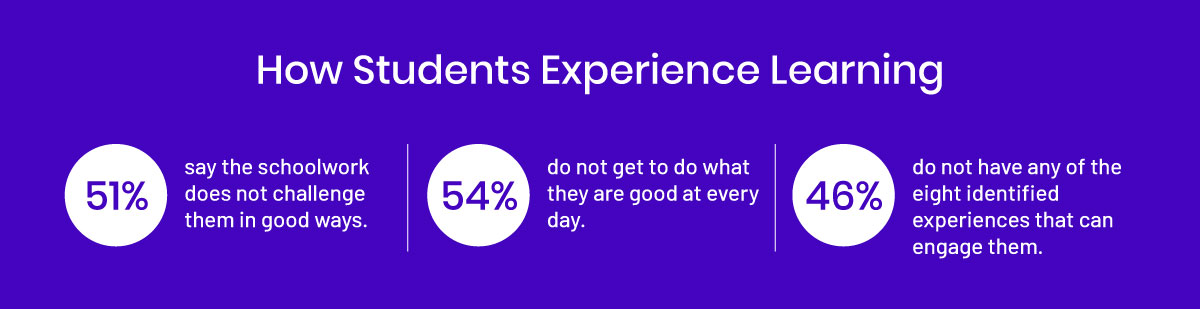
Unfortunately, the numbers become more appalling as students move from kindergarten to primary and then to secondary levels. Here’s what’s missing:
- Personalization, to deliver learning in a way that can motivate and challenge a student positively.
- Active participation opportunities, to give learners a sense of belonging and achievement.
- Alignment of educational content with their strengths, interests, and learning goals.
For K-12 educational publishing platforms, underutilization of learning resources and poor student engagement lead to missed opportunities and revenues as the possibility of more adoption declines. This clears one thing – content alone is no longer the selling point. K-12 educational publishing platforms must serve learning ecosystems that drive engagement, motivation, and academic achievement.
Components of Effective Learning Ecosystems
Digital educational publishing platforms must expand into learning ecosystems, where content delivery, instruction, assessments, and learning analytics work in unison to elevate learning experiences and academic achievement.
Interactive Content
The importance of content that actively and meaningfully delivers learning cannot be stressed enough. This can be through interactive eBooks, which offer everything from hyperlinking to text-to-speech conversions, as well as multimedia learning support, gamified modules, and more.
Assessments
Assessments are considered the ultimate measure of learner success. So, why not make them so? Incorporating ongoing assessments along with formative and summative ones, aligned with students’ preferences and learning goals, is key. Plus, immediate feedback to create reinforcement opportunities and prevent learning gaps can be a differentiator for educational publishing services.
Real-Time Analytics
In the age of data, leveraging analytics is considered a given in educational publishing software; it is no longer an add-on feature. To distinguish yourself, include more than just test scores and attendance. Metrics, such as participation rates, content-engagement levels, answering accuracy, progress in skill/learning level, etc., must show up on teachers’ and parents’ dashboards.
Integrations
You are building a learning ecosystem. Make your content distribution platform the heart of the learning ecosystem, leveraging API-based integrations with diverse rostering tools, SISs, and LMSs. Single-sign-on across these tools to deliver friction-free experiences is crucial. And don’t miss out on strong DRM capabilities, such as time-bound role-based access. Protecting your intellectual property and user privacy is non-negotiable.
Collaboration Avenues
A critical part of engagement is collaboration with peers and teachers. Offering collaboration opportunities to students, via discussion forums, group projects, and video discussions, along with some incentivization, can keep them motivated.
AI Learning Assistant
Teachers cannot be present every time and everywhere. That’s why future-ready K-12 education solutions providers have already integrated AI learning assistants. For instance, MagicBox’s award-winning learning assistant, KEA. It offers teacher-like targeted support, peer-like discussion, competitive opportunities, and parent-like motivation. Whether it is supplementary learning resources or memory flashcards, students can search for everything quickly without losing interest.
AI-Powered Content Creation
Unsurprisingly, course creation is increasingly a part of a holistic learning ecosystem. This is why MagicBox’s All-in-One digital learning solution comes equipped with an AI-powered course and assessment authoring platform. From content indexing to managing multimedia resources, and lesson plan development to assessment creation, it is designed to serve the needs of educational publishing platforms.
From a Mere Content Provider to a Partner in Education
In the increasingly competitive K-12 digital educational publishing market, turning online publishing platforms into a learning ecosystem is more than a competitive necessity. Industry leaders have already leaped into full ecosystems. This is because they recognize how this boosts retention and creates revenue opportunities.
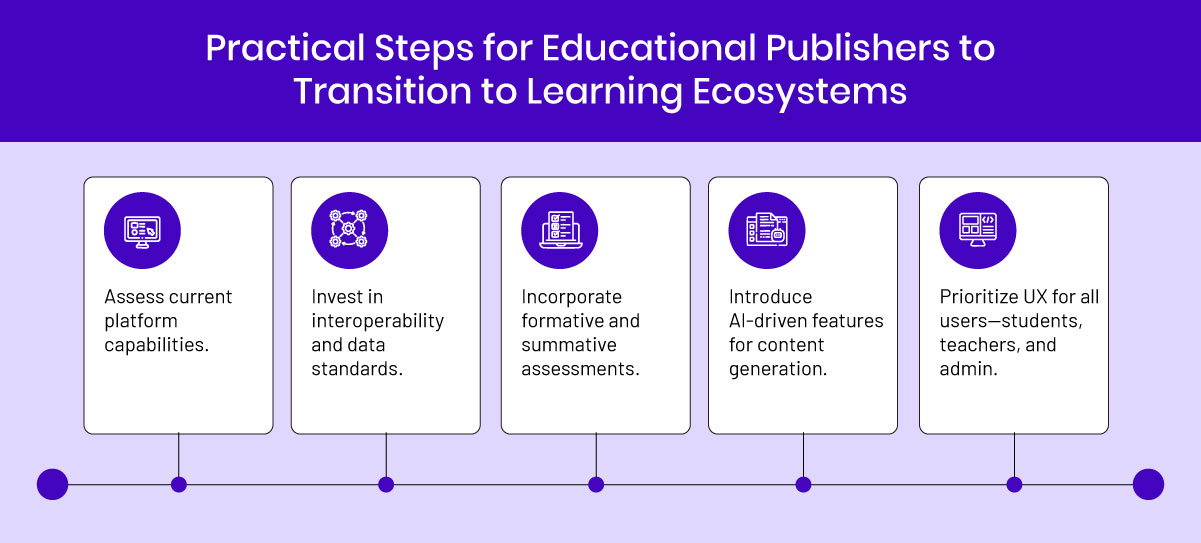
It is time you become an active driver of learning rather than a passive supplier of resources. Think beyond textbooks and evaluation. Think engagement, igniting curiosity, and shaping what’s next in education. Book a meeting with the MagicBox experts to reimagine your platform as a dynamic ecosystem of learning.